Posts

Showing posts with the label bird feeding

Snowbird 2.0

Image
American Tree Sparrow: Always at home in the snow. From Oak Harbor, Ohio, Kenn writes:  When I was a kid, first learning about birds, I read that "snowbird" was the Dark-eyed Junco's nickname.  Juncos are easy to recognize, and for many people in the eastern U.S., they are characteristic birds of winter.  But for me, the real "snowbirds" are American Tree Sparrows.  Strictly winter birds anywhere south of the Arctic, they arrive with cold weather, and they visit Kimberly and me only when the snow flies.   American Tree Sparrows belong to the genus Spizella, which makes them relatives of familiar birds like Chipping Sparrow and Field Sparrow.  The main difference is that Tree Sparrows have their center of distribution at least a thousand miles farther north.  Indeed, "Tree Sparrow" is a misnomer:  many spend the summer far north of treeline, on the tundra, where the largest willows are only a couple of feet tall.  In winter, flocks r...

Every Warbler Tells A Story

Image
From Oak Harbor, Ohio, Kenn writes: Here in northwestern Ohio, “the Warbler Capital of the World,” the warblers are just beginning to show up. They will be flooding through here, in dizzying numbers and variety, in just a couple of weeks. Right now, we’re in the peak stage of eager anticipation for these tiny, active, colorful birds. Our friend Liz McQuaid recently had a Yellow-throated Warbler in her yard in the Cleveland area, a little east of here. (Not this one; the bird in the photo above, poking about in Spanish Moss, is one that Kimberly and I photographed in Texas.) Yellow-throated Warbler is mainly a southern bird, uncommon this far north, but what was really fascinating about Liz’s bird was that it was coming to her suet feeder. Warblers in general are not feeder birds. Although Pine Warblers often come to suet feeders, especially in winter, this is not a well-known behavior for the Yellow-throated Warbler. Hearing about the feeding behavior of this individual ...

Saturday Night Feeder

Image
From Oak Harbor, Ohio, Kenn writes: I don't like to brag, but one thing I can say for Kimberly and me -- we have some really awesome friends and neighbors. For example, in our neighborhood there's a young lady named Delaney, an elementary school student with a sharp mind and a lot of artistic talent. Recently she has developed a strong interest in birds and other nature subjects, and she has been studying them and learning fast. As evidence of her powers of observation, a single Pine Siskin showed up in the neighborhood last month, and Delaney spotted it before Kim or I did. And her enthusiasm must be contagious, because her parents, John and Tiffanie, are now paying more attention to birds also. We had had a number of conversations about birds with their family, and we had given them a couple of copies of our field guides, but we were stunned and thrilled recently when they knocked at the door and presented us with a beautiful, hand-made, personalized bird feeder that they h...

A Special Gift: Wildlife at the Bird Feeder

Image
From Oak Harbor, Ohio, Kenn writes: I don’t often blog about bird feeder happenings, but in honor of the holiday season, I wanted to let all of our friends know about a major triumph at our feeders. Kimberly and I are interested in all wildlife, of course, and sightings of wild mammals can be particularly exciting. What a treat, then, to actually attract one of these elusive wild creatures into our own backyard, where we can observe it and begin to learn about its habits. Imagine how thrilled we were when we looked out the window on Christmas morning and saw this: Yes, it’s a squirrel. If you have spent any time in wild habitats with tall trees, you may have seen these wary acrobats climbing about in the branches, far above the ground. Getting a good look at one, though, that’s another story. Kimberly and I had glimpsed these wily creatures around Oak Harbor, but we had hardly dared to hope that we could actually attract them to our own yard. But here was one of these elegant wild ani...

GBBC!

Image
This White-throated Sparrow is just waiting patiently to be counted ... From Oak Harbor, Ohio, Kenn writes: Here's a shout out to ace birder Rob Fergus, who writes the very popular blog over at The Birdchaser and who is also one of the principal organizers of the Great Backyard Bird Count (GBBC). The GBBC is going on right now, through Monday the 16th (Presidents' Day), and it's easy for anyone to get involved. You can count birds from the comfort of your kitchen window, or you can trek out into the wilderness, and your results will help to give a valuable snapshot of what's happening with birds all over the North American continent this weekend. It's the second-most-fun thing you can do on Valentine's Day (and it may be THE most fun thing you can do on Presidents' Day). It's a great activity for families -- if you're a parent with kids who are lukewarm on birds, get them involved in helping to count and then let them enter the data online and ...

Degrees of Separation

Image
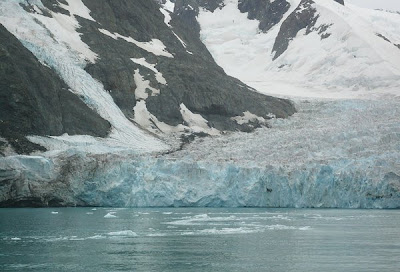
Drygalski Fjord, South Georgia Island, Antarctic Region Oak Harbor, Ohio, United States of America From the snow belt, Kenn writes: During our whole trip to Antarctica, the coldest air temperature we experienced was about 29 degrees Fahrenheit, or just below freezing. When our flight from Buenos Aires landed at Dallas-Fort Worth, it was 16 degrees out, and our connection was delayed by three hours because of complications in de-icing the plane. And when we finally made it back to the Detroit airport, our dear friends Vic and Lois were there to meet us, but they had braved icy winds and snow-covered roads to be there. Were we cold in the Antarctic? No! But coming home was something of a shock! Our first morning back at home, we had to shovel a path to the bird feeders, but soon we were rewarded by returning guests: our first Northern Cardinals of the year, our first Blue Jays of the year. After weeks of novelty among the penguins and petrels and other southern seabirds, it was...

Random Bird: Purple-bibbed Whitetip

Image
Kenn wrote this back in December: (Today, January 5, we're supposed to be leading a group of birders to the Otamendi Nature Reserve north of Buenos Aires, Argentina. It's unlikely that we'll have a chance to post anything, so this "random bird" is set to post in our absence.) That’s one of the great things about being a bird blogger. Who else gets to title a post "Purple-bibbed Whitetip?" This small hummingbird (technically Urosticte benjamini ) occurs only on the west slope of the Andes in Colombia and Ecuador, mostly in the understory of dense forest in the subtropical zone. It had been considered "rare to uncommon and perhaps local" and "not often seen" as recently as 2001. That was when the outstanding two-volume "The Birds of Ecuador," by Bob Ridgely and Paul Greenfield, was published. But since then, a number of ecotourism lodges in Ecuador have put up hummingbird feeders, and suddenly this rare-and-not-often-seen hu...

Extreme Bird Feeding

Image
From Oak Harbor, Ohio, Kim writes: While the weather here in northwest Ohio the last few days has been downright balmy, we suffered through a stretch of incredibly brutal weather for several days. Temps at or near zero, 25+ mile per hour winds, and everything was coated with a thick layer of ice. It was really hard to force ourselves to even go outside. Several Christmas Bird Counts scheduled for last weekend were canceled. You KNOW it's rough outside when birders decide not to do CBCs. As a result of the weather, I spent a great deal of time last weekend keeping the feeders filled at the Observatory. Turns out, that can be interpreted in a couple of ways, depending upon your perspective. What I meant by "filled feeders" was this.... A human's idea of "bird food"... And, here's what "filled feeders" means from a different perspective... Oh yeah! Look at all that bird food... This immature Red-tailed Hawk must be really desperate. It was haun...

Old Friends New Again

Image
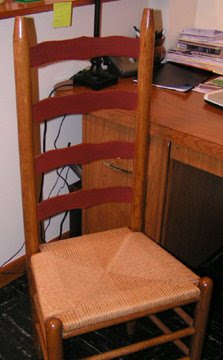
From Home Sweet Home, Kim writes: I've spent the better part of the last two days preparing a presentation about the trip we took to the Galapagos last November. Kenn and I will be giving the talk together (which is so fun!) tomorrow night at the Ottawa National Wildlife Refuge ( ONWR ). ONWR is the Observatory's neighbor, just a half mile west of the marsh that BSBO lives in. We have a very strong working relationship with the refuge staff, and we partner on many projects and programs. They're a great bunch of people and do amazing work maintaining habitat for thousands of migratory birds. I feel so blessed to have a refuge in our area, and most of 4500+ acres were purchased with Federal Duck Stamp monies! Every birder should be buying the stamp! My office chair kind of sucks, so as I was putting the talk together, I'd get up and check the feeders every once in a while just to move and stretch a little. Who thinks Kim should get a new office chair for Christmas?! K...

Invasion of the Thistle Snatchers

Image
From Oak Harbor, Ohio, Kenn writes: The title from this post came from an e-mail we got yesterday, passed along from a naturalist at a nature center farther east in Ohio. Thistle snatchers -- yeah, they're talking about Pine Siskins. These sturdy little nomads have been showing up all over the place, little flocks bouncing around the fields and woodland edges all over the Midwest. I wrote about these birds back on October 14th -- see that post for more info. It doesn't look like it at first glance, but the Pine Siskin is closely related to the American Goldfinch. In my Kaufman Field Guide to Birds of North America , I described it as looking "like a goldfinch in camouflage." And like the goldfinch, it's a major seed-eater. It likes the seeds of wild thistles, but it will come to bird feeders (often in the company of goldfinches) to eat Nyjer seed, which is often marketed as "thistle seed." One thing you'll notice, if you get siskins at your feeder, ...