Posts

Showing posts with the label winter finches

The Finch Forecaster
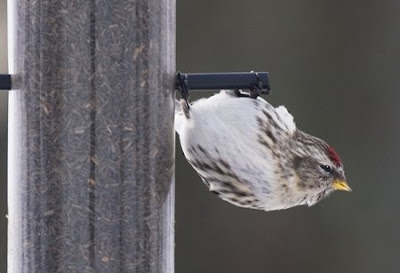
Image
From northern Ohio, Kenn writes: This Common Redpoll was outside our window a year ago, in December 2007. It was one of dozens that came to our feeder that month, and one of hundreds that we saw in the general area. This month, we haven’t seen a single one. Redpolls are in the "winter finch" group, and they were the headliners last year. Common Redpolls (and a few of their pale high-Arctic relatives, Hoary Redpolls) were all over the central and eastern U.S. and southern Canada in the winter of 2007-2008. Pine Grosbeaks also moved south in good numbers. So did Red-breasted Nuthatches and Bohemian Waxwings, which are not finches but which are similarly erratic in their winter occurrences. We used to talk about winter finch invasions being "unpredictable," but that’s not accurate. These invasions are caused by changes in the supply of natural wild food in the boreal forest of Canada and Alaska, and if we knew enough about what was happening there, we could make pred...

Happening Right Now: Crossbill Invasion

Image
From Birding Central, Kenn writes: In the northeastern quadrant of the U.S. and adjacent southern Canada, this is shaping up to be a huge winter for northern invaders. I’ve written already about Pine Siskins invading southward, and that push is continuing, with flocks reported all over the east. Northern Shrikes have appeared in unusual numbers, and so have Snowy Owls, with many around southeastern Canada and the Midwest. Flocks of Evening Grosbeaks have put in brief appearances in several places. Now, just within the last few days, flocks of White-winged Crossbills have set the hotlines buzzing all over Ohio. Of all the "winter finches," White-winged Crossbills are the most nomadic. They specialize on cones of spruces, hemlocks, and tamaracks, using their trademark crossed bill tips to pry open the cones and get to the seeds. The map here shows their overall range in North America -- but they are never present throughout this range at once. They concentrate where there are ...

Siskin Attack!

From Oak Harbor, Ohio, Kenn writes: I heard it this morning, high overhead, a sound that I'd been waiting for. Distant but unmistakable, a mix of querulous rising notes and dry rattles. Scanning the sky, I picked up a flock of half a dozen small, short-tailed birds, in high, bounding flight. Yes, they were Pine Siskins, all right. Every fall, birders over much of the U.S. and Canada keep an ear toward the sky, listening for the calls of "winter finches" flying overhead. The "winter finches" are a group of about nine species that nest in the far north or in high mountains and that are mostly vegetarian in their diet: they eat seeds, buds, berries, but relatively few insects, unlike most other songbirds. These "winter finches" are extremely variable in their winter distribution. If there's a good supply of food in their nesting range -- a good cone crop on the spruces, for example, or lots of seeds on the birches -- the finches may stay in the Arc...